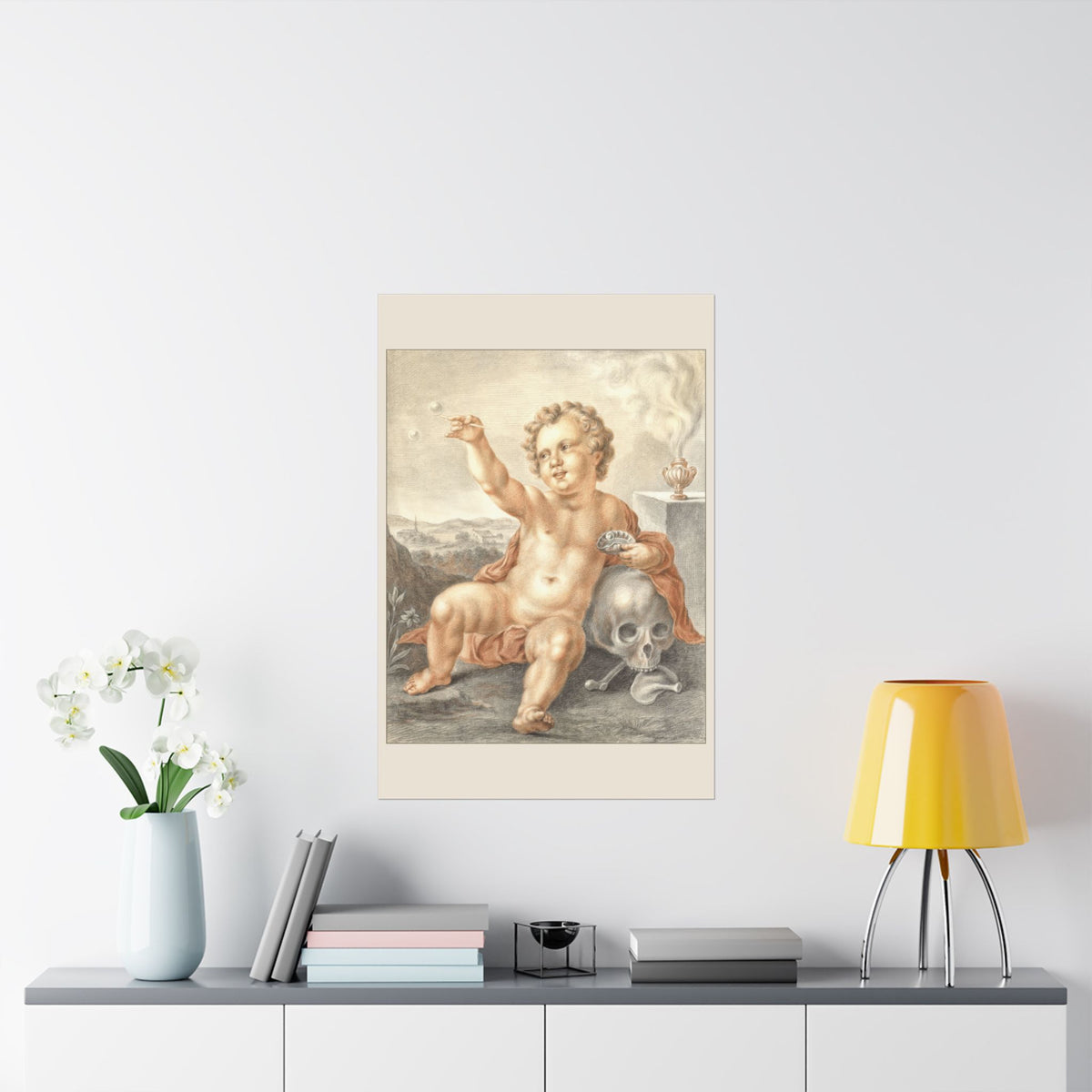
A child blowing delicate soap bubbles beside a human skull forms the central subject of this remarkable 1796 drawing by Dutch artist Abraham Delfos (1731–1820). Combining the innocence of childhood with the unmistakable presence of death, the composition explores the fragility of human existence through one of the most recognizable symbols of European Vanitas art: the fleeting soap bubble. The contrast between youthful vitality and the silent skull creates a contemplative allegory of life's brevity and the inevitability of mortality.
The young child, partially draped in reddish fabric, sits upon a rocky surface while holding a small dish of soapy liquid and raising a bubble pipe toward the sky. Two translucent bubbles float nearby, their delicate forms suggesting the temporary nature of life. Beside the child rests a large human skull above scattered bones, reinforcing the contrast between the beginning and end of human existence. In the background, a small smoking vessel releases curling wisps into the air, adding another traditional symbol of transience.
The soap bubble, known in historical allegorical art as Homo Bulla — "Man is a Bubble" — represents the fragility and unpredictability of human life. Like a bubble that forms, glimmers briefly, and disappears without warning, earthly existence is temporary. The skull and bones emphasize the certainty of death, while the rising smoke serves as a reminder that beauty, pleasure, and worldly achievements eventually vanish.
The drawing belongs to the European traditions of Vanitas and Memento Mori, which encouraged reflection upon mortality and the fleeting nature of earthly pleasures. By placing a playful child beside symbols of death, Delfos presents the subject through an unexpected combination of innocence and solemnity. The image reminds viewers that the passage of time begins at birth and that youth offers no exemption from the universal certainty of death.
Executed in black and red chalk on parchment, the original artwork demonstrates Delfos's delicate draftsmanship and sensitivity to light, texture, and form. The softly modeled figure, expressive facial features, carefully rendered skull, and atmospheric landscape create a harmonious composition. Warm reddish tones contrast with the cooler grays of the skull and surrounding scenery, lending the drawing a gentle, almost peaceful appearance despite its somber subject.
With its combination of childhood imagery, skull symbolism, and historical allegory, this reproduction complements libraries, studies, reading rooms, Gothic interiors, and collections devoted to eighteenth-century art, philosophical symbolism, and the macabre. It also makes an unusual gift for admirers of memento mori imagery, Dutch drawings, historical curiosities, and artistic representations of life's transience.
- Historical Vanitas drawing by Abraham Delfos, dated 1796
- Allegorical depiction of a child blowing soap bubbles beside a human skull and bones
- Traditional Homo Bulla symbolism representing the fragility of human existence
- Additional symbols of mortality, including rising smoke and scattered bones
- Reproduction of an original drawing executed in black and red chalk on parchment
- Reproduced with the delicate tonal variations, aged appearance, and fine details of the historical artwork
- Giclée printing on archival paper
- Smooth matte finish
- Suitable for indoor wall display
- Supplied unframed
- Slight production size tolerance of approximately ±1/16 inch
Handle with clean, dry hands. Avoid prolonged exposure to direct sunlight and moisture. If necessary, gently remove surface dust with a clean, dry cloth.